Read the latest Syrinscape blog posts for tabletop RPG tips, Game Master and Player advice, and ideas for creating more immersive adventures.

Imagine the scene:
The party gathers in the local tavern, ales in hand, waiting for the next adventure. But look, a hooded stranger beckons. They speak with a deep, mysterious, gravelly voice, whispering about a crypt just outside the town…
This is fine. Really! It totally works. But if we’re being honest, it’s also been done too many times already.
What makes an NPC more than just another dark cloaked quest-giver (or one of the other cliched tropes)? How do you create non-player characters your players will remember? Those NPCs they remember fondly, joke about later, quote, and maybe even get a little sad when they meet their inevitable demise?
Let’s talk about some ways to make your NPCs feel more alive (while they are)!
What Makes an NPC Memorable?
A memorable NPC sticks in your mind long after their scene ends. Fortunately, they don’t really need an epic backstory or a ten-page character sheet or even any stats at all; they just need a little humanity and a touch of intention.
Players will connect to NPCs that feel real. NPCs with goals, moods, and flaws. Think of your NPC as: a merchant with a short temper, a mayor who always strokes his ermine collar, a blacksmith who is always clearing his throat and coughing. Just about any single specific character trait will help your NPCs become more than just, “ooh look, it’s the plot hook!” Most importantly, it’s not serious levels of complexity that makes NPCs memorable; but consistency and specificity are very important.
A good starting point is to pick one or two defining traits and let them shine. Sometimes a single nervous habit, characteristic or recurring phrase can do more than a page of backstory. It’s little things like that that we all use to help us remember people.
The Types of NPCs That Matter
Let’s start by dividing NPCs into very two broad types: plot NPCs and world NPCs.
Plot NPCs exist to propel the story forward. They’re your quest-givers, allies, and villains. They have clear goals that are a part of the party’s journey. Maybe it’s a smuggler who needs help transporting goods, or a military leader that’s secretly behind the rebellion that needs to be stopped. Think Gandalf and Dumbledore, leaders who offer quests and guidance, pushing the story forward. Think Petyr Baelish (Game of Thrones) or the Joker whose actions create conflict, drive the plot forward and challenge our protagonists.

It’s the peculiarities of Gandalf that make us smile and remember him fondly. Sure he’s super powerful, but how much does the book actually concentrate on that aspect of his character?!
World NPCs, on the other hand, help breathe life into your setting. They might never offer a quest, but their presence makes the world feel lived in. These can be all manner of characters that the party will run into. Think Hodor (Games of Thrones) or Molly Weasley (Harry Potter), beloved characters who don’t necessarily drive the plot forward, but add depth of emotion and ground the story in reality. Think Tom Bombadil (The Lord of the Rings), a super powerful character who does almost nothing useful at all to help our protagonists, but whose enigmatic manner and mysterious power stick in the memory of readers.
Both matter. The plot NPC drives your campaign’s story; the world NPC builds its soul. And sometimes, one can become the other.
See also: Creating PCs with Flaws and Weaknesses – where I explore how believable flaws make any character, PC or NPC, feel more human.

Giving NPCs Depth Without Overcomplicating Them
Here’s a common mistake: some folks think depth equals detail. But depth is more about feeling, not data.
You don’t really need to explain precisely why the innkeeper is afraid of magic. Maybe just show they always flinch when someone casts a spell. Maybe they change the subject when magic is afoot. Or maybe they just leave the room. The players will fill in the blanks themselves, and that’s what makes it memorable.
When creating dialogue, imagine how the NPC sees the party. Are they intimidated? Curious? Bored? Dialogue that reveals an attitude tells your players much they need to know.
Small, repeated behaviors like a gesture, a phrase, or even a laugh can be the glue that makes your NPCs stick in memory.
See also: Just Say Yes: How to Be a Better Dungeon Master Through Improvisation – for ideas on how to stay flexible and let your NPCs evolve naturally with your players’ choices.
Performance: Making NPCs Come Alive
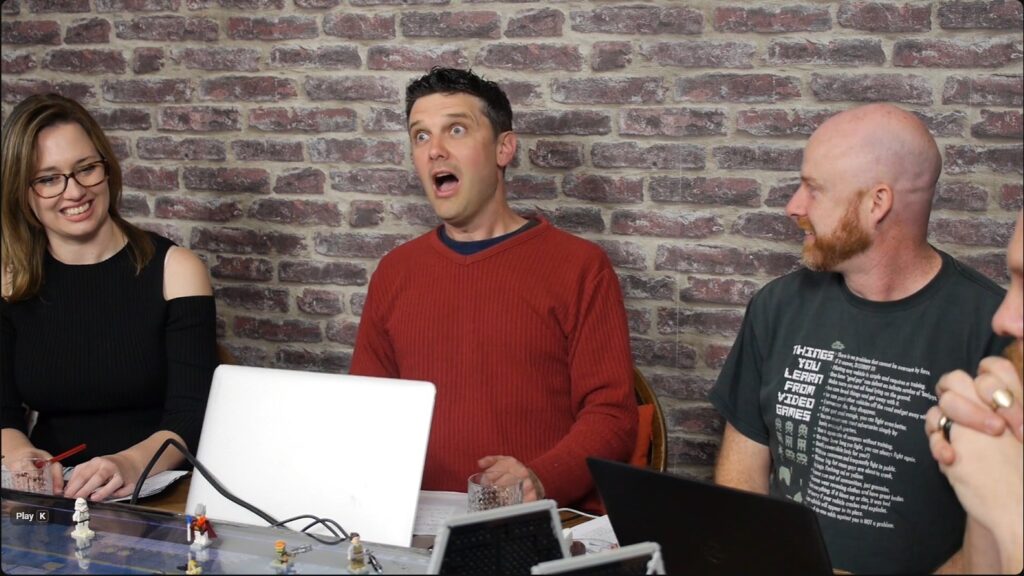
Now for the part that can be a little intimidating: the performance.
Here’s the good news; you don’t have to be a trained actor to pull this off! In fact, don’t try that hard. The goal isn’t to perform Shakespeare; it’s to deliver contrast and energy.
A shift in tone, a slower pace, or a quick gesture can instantly define an NPC. A tired, low voice can show us a weary soldier, while a cheerful rhythm might belong to an overeager apprentice. You might assign a simple emotional “temperature” to each character: cold, warm, frantic, and let that guide your voice.
If doing voices feels awkward, no worries! Use tools that help set the stage. Music, ambient noise, or character-specific sound cues can make the moment shine without you saying much at all. Use Syrinscape to layer sound and emotion in a way that supports your storytelling. It’s surprising how much TTRPG audio will help with “acting” via atmosphere rather than dialogue. Think about the way this is done in movies.
See also: The Psychology of Audio in Tabletop Gaming and Creating Cinematic RPG Experiences – both explore how sound and mood can elevate your storytelling performance.
After all that, the truth is, players don’t need a flawless performance. They really just need to feel that the character is different and worth getting to know. Authenticity beats theatricality every time.
How Players Remember NPCs
Here’s the thing: players remember moments, not monologues.
They might forget the NPC’s last name, but they’ll remember when she risked her life to protect them, or when she accidentally set her own hair on fire with a botched spell, or when she gave that urchin the apple she was just about to bite into. Emotional beats are what stick.
It’s ok to give players some room to form relationships with NPCs. Let them nickname someone, bargain with them, or argue over a moral choice. The second a player cares about what happens to an NPC, that character becomes real.
And truthfully… many of the best NPCs weren’t planned. They were created on the fly, developed through player reactions, and evolved naturally. More often than not the party’s favorite character actually started out as “Town Guard #3.”… not that your players need to know that!
Building a World Through NPCs
Your world’s lifeblood is in its NPCs.
Are the townsfolk friendly or suspicious? Do they suddenly bow when addressed or constantly interrupt? All of these small cues tell the players about the world more effectively than exposition or assigned readings ever could.
Think of each NPC as an opportunity to reveal and color your world to your players. Denizens of a city of scholars might always speak in overly precise terms. The people of a fishing village might greet everyone with weather-related small talk. A mother the PCs meet in town on the edge of civilization might always be worrying about her children at home. A hamlet of small hold farmers might always be asking about how good the yield on plots up the road is. Every minor NPC adds texture and context.
Of course, don’t forget the sound of your world. The crowded marketplace should feel alive with laughter, haggling, and distant music or the tavern of a seedy run down town might feature the sounds of dirty flies, drunk patrons, and sticky surfaces. Subtle environmental sound will help players buy into the setting faster than narration alone.
See also: Creating Cinematic RPG Experiences: A Guide to Using Music and Sound Effects – for tips on using background audio to make your worlds feel dynamic and alive.
Conclusion
Memorable NPCs aren’t necessarily created with perfect planning, but they are born from intention.
Focus on who your NPCs are, what motivates them, and what emotion they bring to the table. Let your players see their humanity (or monstrousness), and fill in the details from there.

Plot NPCs keep your story moving; world NPCs make it matter. And with some creativity (and maybe a touch of Syrinscape sound) you can make your game world feel bigger and richer than anything you could write down in your GM notes.
The next time you introduce an innkeeper, don’t just have them tell the party “there’s trouble on the outskirts of town.” Let them meet someone worth remembering and helping!
Which NPC got more emotional investment from your players than the actual main plot?
What random NPC became the party mascot in your campaign?
Which hurts more as a GM: players ignoring your carefully crafted NPC… or loving “Town Guard #3” instead?
Let me know on the Syrinscape forums. Comment here.